Church Management Academy

Education for Church Managers

  • Home Page
  • Education & Resources
    • Blog
    • Book
    • Workshops
  • About Us
    • Michael Castrilli
You are here: Home / Blog

By Michael Castrilli

Make Math Fun!

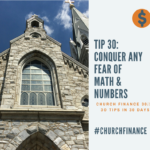
Tip 30, Conquer any fear of math and numbers and includes a picture of Villanova University Chapel in Philadelphia

Now we all know people that like numbers, and we know people that don’t like numbers!

For some, I think the love/hate relationship to numbers goes back to our early education. Remember in school when someone would ask the teacher, “How will I use [insert mathematic topic] in my life?” Most teachers provide a weak response, and my perspective is that people fear numbers because they have not been taught the potential positive impact numbers can offer in work and life. 

The first post of the Church Finance 30/30 Series was about the same topic, with a different slant – Budgets are about freedom, not constraint. The same can be said of numbers. Numbers are about freedom, not constraint!

The main point – we need to teach people how to use numbers to help and to inform decisions, not annoy people.

Finance is not all about numbers, but numbers are a critical input and output to finance. So, how do we connect the dots and help people enjoy, and not dread math?

The Wall Street Journal ran a great article, “How One Entrepreneur Conquered Her Math Fear” by Alexandra Samuel.

I think Entrepreneurs can be much like pastors managing a church — they may be a one-person show, with limited support, and a tremendous responsibility for ALL aspects of management — Finance, HR, Advertising, Marketing

Samuel outlines four ideas that I want to use to help you conquer your fear of math, and I will share my journey with numbers along the way.

Action 1: “Learn quantitative thinking with a passion project”

Samuel’s point is that you are not going to get confident with numbers if you’re not interested.

When I was a little boy, I had a teacher tell me, “Mike, you are not very good at math, you should focus on other subjects and be good at those subjects.” WHAT? This is a terrible thing to say to a kid. But, kids listen to their teachers, and I listened well. For a long time, I thought I was “bad” at math.

It wasn’t until my teacher in high school, Mrs. Donna Eichenlaub, helped me make the connection between numbers and something I WAS interested in – money. (As a side note, Mrs. Eichenlaub was so influential in my life that I dedicated my Parish Finance Book to her).

Mrs. Eichenlaub was the first to turn me on to a lifelong passion and career in numbers. I am no statistician, but the idea that numbers can bring insights into all aspects of life was amazing to me.

My passion project became — the stock market. I pretended I had $1,000 to invest, and “invested” that money in a few of my favorite companies – Starbucks, Nike, General Electric.

Each day after school, I would come home and check the stock price in the newspaper (Hey, I am not ancient, but it is true – the internet was not invented yet). Once I saw the share price for the day, I would calculate the gain or loss, the percentage increase or decrease from the time I bought the stock, and then I would predict where I thought the stock price would go. It was terrific. 

Ok – I have no idea how my fake portfolio ended up, but to this day I still love the stock market and calculate my stats!

What is your passion project? Remember, learning math does not have to start with church topics.

What are other things that excite you? Maybe you love sports — calculate baseball, basketball, football, hockey stats. Do you like cars — calculate MPG. Do you enjoy politics — calculate the number of pollsters that were correct versus incorrect in the 2020 election. The list is endless.

Action 2: “Find a question you’re desperate to answer with numbers”

Samuel writes, “There’s no better motivation for conquering your math phobia than a question that you are motivated about answering.”

What is your question that numbers could help you answer? Maybe you want to know how much collections have grown or declined over the last five years?

Once you have the numbers, you could think through other non-math factors like neighborhood demographics or personnel changes (like the appointment of a new pastor) that may have impacted collections. Numbers provide a great way to help you think through and find solutions to questions.

Action 3: “Recruit a mentor-humbly”

Push past your comfort zone and find someone to help you navigate the math waters. “Since you don’t want to make a recommendation, much less a decision, based on mistaken calculations or methodology…” get a mentor to help you check your work. Samuel adds that this person should be someone you can approach humbly and honestly.

In the church world, I have found church people get paranoid about others finding out what they don’t know. Don’t let this stop you; if you’re uncomfortable recruiting someone on the inside — like a member of the finance council — find someone on the outside. Maybe it is another pastor, a local CFO, or even a family member that you know is good with numbers. Trust me — there are plenty of people in the world that have made numbers their careers.

Action 4: “Get indignant about your math education”

You can do it! Allow this math journey to help you become a better leader. Instead of walking into a finance council meeting afraid of the financial statements, you can grow confident and comfortable. Be relentless in your pursuit of learning.

Action 5 – Have fun (I added this one!)

Fun? Enjoyable? Absolutely. I learned math the same way I learned the piano. Let me explain. I am a big fan of Elton John and loved the song, “Your Song.” So, I went out and bought a music book filled with Elton John’s music. I pounded away at the piano until I was able to play simple chords with my left hand, and the melody with my right hand. It was great, and soon enough, I felt great. Was I good? Not necessarily, but, was I comfortable? Absolutely. 

The same applies to math. Get comfortable and learn to enjoy the questions and see what solutions emerge.

There is only one person that can stop us from learning something new – us!

You learned how to ride a bike by riding, to drive a car by driving, to preach by preaching — now learn something new by trying!

It has been a pleasure to journey with you through these 30 days of 30 tips. Please share your thoughts, comments and questions with me at mjcastrilli@gmail.com.

Chapel at Villanova University

Filed Under: Church Budget and Finance Tagged With: Church Finance Tips

By Michael Castrilli

Checks and Balances for Church

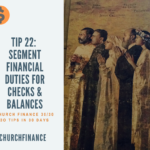
Tip 22, Segment financial duties for checks and balances. The picture includes a picture of the Communion of Saints Tapestries in the Los Angeles Cathedral

In some churches, one person counts the Sunday collection.

The same person deposits the collection funds with the bank and is then responsible for issuing all of the church’s checks.

And the same person is then responsible for reconciling the checkbook.

There are no checks and balances when one person performs all of these tasks. This system places too much temptation in their hands.

Segment Church Finance Duties

At every church, there needs to be segmentation of duties. That is, no one person should perform two consecutive functions in the financial chain of events.

Where possible, it is even preferable to have a separate person perform each of these tasks. Naturally, in a church with a small staff, that might not be possible. At a minimum, there should be rotating collection counting teams staffed by church volunteers and more than one person should be involved in depositing the collection. A different person should be charged with reconciling the checking account.

It is not just in the handling of collection funds where the segmentation of duties is important. In fact, it might be even more important, and the temptation to steal even greater, in the case of other church revenues such as church fundraisers, which are heavily cash-based.

Creating safeguards and internal controls for church finances is not about trust – it is about protection and accountability.

When you get pushback from those who may feel as if you are taking away some of their responsibilities, you can respond by saying, “This is not about trust, this is for your PROTECTION.”

Think about it this way – without strong internal controls, if the money goes missing, how are people protected? If there is no process, there is also no protection.

*Portions of this text come from Parish Finance: Best Practices in Church Management (New York: Paulist Press, 2016), Chapter 8.

Read Some of our Most Popular Church Finance 30/30 Tips
Church Budgets are about Freedom

Church Priorities + Budget = Results

Financial Transparency – Allow the Light to Shine

Potholes are in the Plan

Communion of Saints, Los Angeles

Filed Under: Church Budget and Finance Tagged With: Church Internal Controls

By Michael Castrilli

Church Budget Phases 101

There are three main phases of the church budget process. All budget processes have components of these three phases. Therefore, by understanding them, you’re on the right track to managing your church budget process with ease.

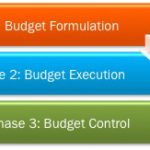
Phase 1: Budget Formulation

The budget formulation stage includes gathering relevant policies, soliciting information from staff and parishioners, documenting assumptions, and projecting revenues and expenses. By developing a resource plan to put priorities into action, collaboration and transparency are critical to this phase of the budget process to ensure openness, buy-in, and accountability by the entire parish community.

Three Phases of the Budget Process

Phase 2: Budget Execution

Once the budget is approved, budget execution is the phase when the plan is put into action. The key features of budget execution include establishing and communicating clear policies and procedures for the receipt and disbursement of resources and ensuring financial transparency.

Phase 3: Budget Control

Budget control processes and procedures are established to ensure that the parish meets planned targets for revenue and expenses. If challenges arise or circumstances change for any reason, tools like variance analysis help parish leaders assess the impact of changes and proactively mitigate financial risks.

Now that we have a basic understanding of the budget phases, next week, we will review the different components of what we will call – The Master Budget!

Filed Under: Church Budget and Finance

By Michael Castrilli

Bottom-Up Budgeting: Start From The Ground Floor

spiral staircase

Which budget method(s) do you use when you create your church budget?  How do you estimate revenues and expenses? Last week we discussed top-down budgeting! This week, let’s take a look at bottom-up budgeting.

Bottom-up Budgeting

Sometimes referred to as zero-based budgeting, the bottom-up method involves building a budget from the lowest income/expense elements and then rolling them up into the total budget request. From zero, each cost element is developed and justified. Therefore when the budget is complete, the program manager has a thorough understanding of the budget under their management.

Advantages/Challenges

The advantage of this method is that each cost element is scrutinized and justified in order to develop the budget. The challenge to this type of method is that it can be time-consuming due to the comprehensive nature of building from zero up.

spiral staircase

Therefore, the leader might consider using this method for one department at a time or taking a bottom-up approach every other year so that the process is not overwhelming for those involved in building the budget.

For example, maybe you start with the Music program, and the following year, review the Religious Education program. When a budget has been developed using the bottom-up approach method, the insight into a program/department is typically very good.

Another advantage of this method is that the detailed analysis provides a level of granularity not necessarily achieved by top-down budgeting. With top-down budgeting, the dollars are broken out from a broader perspective, whereas the bottom-up method creates a more precise estimate of program costs.

Can you figure out what the greatest challenge to implementing a bottom-up budget method? You guessed it; the method can cause anxiety. People may feel like you are scrutinizing them and get defensive. Help staff to understand the answer to questions like, “Why me?” or “Why my program?” Be truthful. If you are asking for staff to build a bottom-up budget because you are concerned about overspending, let them know. We often think that we don’t want to concern staff. But guess what? They become concerned anyway.

When you answer the “why?” question truthfully, watch as build buy-in and rapport. People are happy to help build a great budget when they are clear about expectations and outcomes.

Photo Credit: mripp Flickr via Compfight cc

Portions of this text are excerpted from Parish Finance: Best Practices in Church Management (Mahwah: Paulist Press, 2016), Chapter 4

Filed Under: Church Budget and Finance

By Michael Castrilli

The 3-R Approach to Address Financial Challenges

Tip 26: Address financial challenges with 3R, Reflect, Review, Refine and a picture of St. Peter's Basilica in Rome, Italy

Previously we have discussed how to construct a church financial narrative with impact and ease. However, we all know that writing about money is simple when finances are in great shape. Inevitably, church financial challenges occur and also need to be communicated.

Address Financial Challenges with 3-R

Picture of doors with the inscription "Holy doors of Mercy" showing that openness if required when it comes to addressing financial challenges
The Cathedral Basilica of Saints Peter and Paul., Philadelphia, PA

For example, from a decrease in collections, the parish drew a larger percentage of endowment funds than in previous years. Responding to financial challenges can feel overwhelming, but consider breaking the problem down using the 3-R Approach. The first step is to Reflect what has occurred. What is the actual data telling you about what happened? The second step is to Review reasons or circumstances and consider any changes that are necessary for the future. The third step is to Refine any policies and procedures to mitigate the likelihood that the problem will occur again.

When reporting a challenging situation, keep the narrative simple, straightforward, and offer answers to the relevant “W” questions.

  • What happened?
  • Who is/was involved?
  • When did it take place?
  • Why did it happen?

So, we have constructed the financial narrative, we have addressed any challenges, now what? Let’s choose the most compelling visuals to include in your financial reports. Next week we discuss choosing visuals to communication financial understanding!

Read More Church Finance 30/30 Tips

Filed Under: Church Budget and Finance

  • « Previous Page
  • 1
  • 2
  • 3
  • 4
  • …
  • 10
  • Next Page »

Sign-Up for Academy News and Resources

We promise not to spam you!
* indicates required


Copyright © 2026 Church Management Academy