Church Management Academy

Education for Church Managers

  • Home Page
  • Education & Resources
    • Blog
    • Book
    • Workshops
  • About Us
    • Michael Castrilli
You are here: Home / Archives for Church Finance Tips

By Michael Castrilli

It’s Not Just a Phase

Tip 11, Formulate, Execute, & Control and a picture of the Cathedral of Notre Dame, Paris

My experience working with ministers is that for many, church budgeting is viewed as a necessary, yet stressful and time-consuming exercise. People resist or even fear the topic because of seemingly complicating processes or past negative experiences. Even with personal finances, many people grow up learning that developing a budget is good practice but a constraining activity designed to prevent or control people from doing all of the things they want to do.

In simple terms, the budget is the tool that connects church priorities to financial resources. The alignment between church mission, vision, pastoral priorities, and budgeting are integrally linked. Effective parish budgeting not only enables you to plan, allocate, and manage resources effectively, it will empower you with information and insights to help inform decision-making.

So, where do you begin? Let me help debunk the myth of budgeting as a constraining activity and provide some simple strategies for developing an effective, efficient, and collaborative budget and financial management practices. Let’s begin with understanding the three main phases of the church budget process.

Tip 11: Formulate, Execute, Control

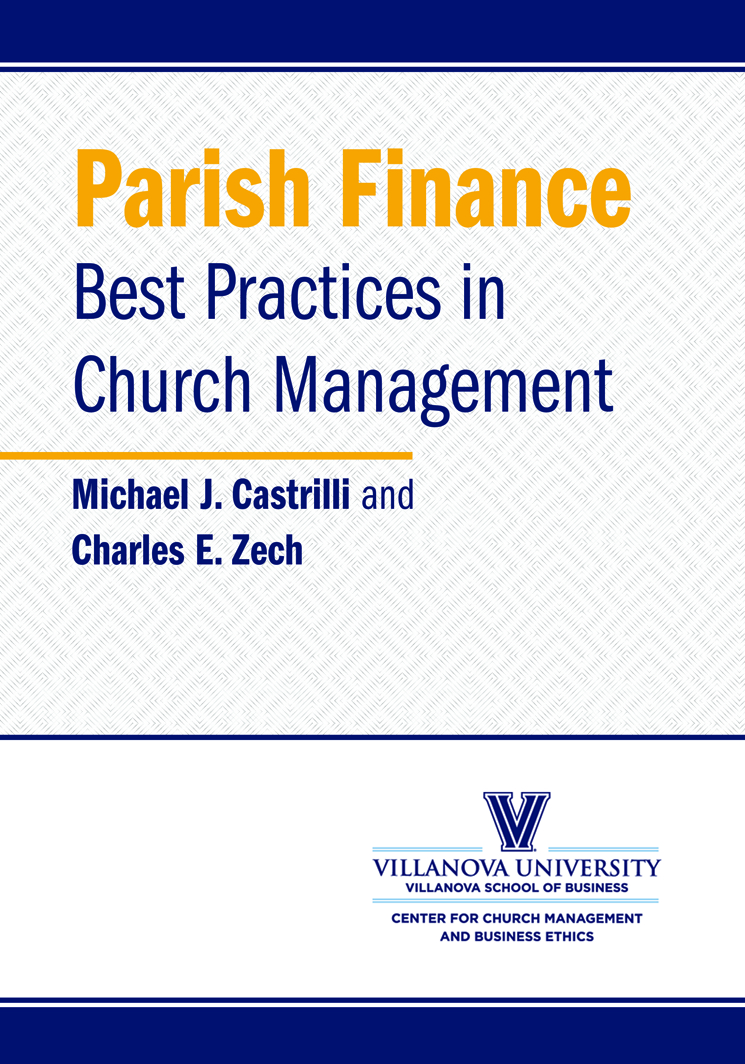
Below is an excerpt from Parish Finance: Best Practices in Church Management (Mahwah: Paulist Press, 2016).

Phase 1: Church Budget Formulation

Budget formulation is the process used to develop the budget. This is where you will review the variety of income and expense categories and determine how much you expect to receive and project how much you plan to spend. There are a variety of methods we can use to create the budget and in which we can develop the budget. Whether you use top-down, bottom-up, incremental, or flexible budgeting, the framework will help you structure the development.

In the budget formulation phase, the parish will get into the nuts and bolts of budget building. Here a variety of questions will be answered including:

  • What are the assumptions and expectations for the upcoming year?
  • How will resources be allocated for staff, programs, emerging requirements, or assets?
  • What information and methods will be used to ensure that accurate projections/forecasts are developed for income and expenses?

This is the phase of the budget process where we will build the “budget house.” We will review architecture plans, pour a solid foundation, frame the walls, and build a strong roof so that as storms rage, the house remains sturdy and strong.

Phase 2: Church Budget Execution

Once the income and expense parameters have been set, and the budget has been approved, the plan is ready to be implemented. Budget execution is the phase in the budget lifecycle when the checks are written, salaries paid, and income is received. Policies and procedures are established to ensure accountability. Clear roles and responsibilities are developed for who, what, when and how resources will be authorized, distributed, and accounted for. The outcomes of this phase are policies and procedures for collecting and distributing resources. Book: Parish Finance: Best Practices in Church Management
Phase 3: Church Budget Control

Complementing the execution phase, budget control is the part of the budgeting lifecycle that ensures that the efforts that you have put into the other steps of the process are successful. Strategies and techniques can be deployed to keep you on track and headed in the right direction with warnings along the way if you are getting off track. Actual income and spending amounts are compared to budgeted projections to measure variances between the amounts. With this information, parish managers can accurately account for resources or deploy mitigation tactics if spending is getting out of control or if resources need to be reallocated.

All three of these phases build upon one another and create a budget lifecycle that brings flexibility, adaptability, and accountability to financial planning and actions.

Qeustions/Comments? Contact me at mjcastrilli@gmail.com.

Filed Under: Church Budget and Finance Tagged With: Church Finance Tips

By Michael Castrilli

Budgets guide people, but people control budgets

Rome on the seashore

Budgets are not developed to restrict you. Never forget, human beings are the ones that are managing the budget! You can’t take human insight, experience, and instinct out of financial management.

Remember a budget is not created to make you feel like you are trying to drag an anchor through the church pew.

Tip – Budgets guide people, but people control budgets

People often feel as if they are a servant to the budget, instead of the reverse. The budget is a plan, or a guide, to manage the money coming into the church (revenues) and the money going out (expenses).  As with any plan, at times, adjustments need to be made. Budgets are not meant to be perfect. By the very nature of a budget, we forecast revenue and expenses. A forecast is a prediction, and without humans to help navigate the budget, it merely becomes a nice looking, Excel spreadsheet!

What do you do about mistakes? Remember, you can always deploy the 3-R Approach to address financial challenges.

The key point – People are the critical link between a budget that works and a budget that fails.

Tip 2 is brought to you by the Church Finance 30/30 Series

Filed Under: Church Budget and Finance Tagged With: Church Finance Tips

By Michael Castrilli

Perfect Is The Enemy of Good

A picture of Sagrada Familia, Barcelona Spain

Yesterday, we discussed the four stages of the church budget process. As you implement the four stages, it is important to remember a guiding principle –  perfect is the enemy of good! Why wait to create a collaborative and transparent budget process until you believe every aspect is perfect? No need to wait, you can start by just taking the first step.

Establish a Process

The first year of any new process can be challenging, but once established, every part of the organization will be on the same page of what is expected. For example, if your budget begins on July 1, you may want to establish that budget guidance will be distributed each April and the draft budget will be proposed by Memorial Day. Developing a schedule of key budget process dates provides everyone more flexibility so those involved can effectively manage their time. Establish a process in year one with the knowledge that it may not be perfect and that you can refine it by year two.

Reflection Questions 

  • What are the key dates or milestones for the various phases of the budget process?
  • Have I informed others about what is expected of them by certain dates?

Provide Clear Guidance

Give clear guidance on your expectations for the process, the future, and what success looks like moving forward. If you are going to ask others for information, communicate your objectives and provide visibility in your thinking for the upcoming year.

Reflection Questions:

  • Am I clear in my direction and thinking surrounding priorities?
  • Do I need to simplify or improve how individuals submit calculations and estimates?
  • Do I need to develop additional guidance surrounding narrative descriptions?

Open Communication Lines and Seek Feedback

The budget process should be an opportunity for all voices to be heard. When you open the budget process for the upcoming year and set expectations, hold a town hall meeting where all parishioners are welcome. Listen to the voices of the people around you. Open up the priority setting process so you can gain broader involvement and commitment by the staff and your parishioners. Ask individuals to help brainstorm ideas. If not, then be clear as to the direction you are setting. When others feel involved, they will be more committed.

Reflection Questions:

  • Who are your stakeholders that need to be brought into this process?
  • What voices have been missing that will help you create a spirit of openness and transparency?

Read More Church Finance 30/30 – 30 Tips in 30 Days

Filed Under: Church Budget and Finance Tagged With: Church Finance Tips

By Michael Castrilli

Church Priorities + Budget = Results

picture of the outside of St. Paul Catholic Church in Philadelphia Pennsylvania

Show me your budget and I can tell you how you spend your time, where you focus your resources, and what you believe are the greatest priorities for your church and programs.

Think about your personal spending. If you showed me your latest bank statement or credit card bills, I would be able to tell you how you spend your time and where you focus your personal resources. All I would have to do is take your income and expenses for the statement period and assign categories to the ones we see repeated.

For example, I may see expenses for great restaurants (dining), a gym membership (fitness), doctor visits or medications (medical), and ticket purchases for shows and concerts (entertainment).

On the incoming side, I may see a check deposit from your job (salary). If you provided two or three months of data, I would have a good idea about how you prioritize resources.

Tip 6:  The budget is a reflection of your pastoral priorities

The same can be said of your church priorities. What are the categories of income and spending that the parish receives and spends? Most likely, the largest income category for the church includes offertory collections while staff salary and benefits drive the majority of expenses. These categories make sense as priorities. Without collection income, the church would have virtually no resources to operate besides savings or any endowments. Salary and benefits also make sense because of the need for the most critical resource for any organization—people to accomplish the work.

This makes analyzing the next categories of spending very important. After salary and benefits, what is the next highest level of spending? And next? And next? This is when budget analysis can really help determine a way forward (More on this topic later in the week).

There is no doubt that church leaders are busy people, so the next step in the process is to take the data that has been collected and focus your time. Focusing on the “right” areas of the budget means prioritizing your time so that you spend the greatest amount of effort in those areas that will provide the most significant benefits. A nice tool to deploy during this phase of the process is to calculate the Budget Category Impact Percentage (BCIP). Tomorrow, we will discuss how to calculate the BCIP!

Read More Church Finance 30/30 Tips

Filed Under: Church Budget and Finance Tagged With: Church Finance Tips

By Michael Castrilli

Limit Church Bank Accounts

Tip 21, Limit church bank accounts and a picture of the chapel at St. Borromeo Seminary

It’s not unusual in a typical church for each ministry or organization to want control of their finances. Each will insist they need their own checking account. They don’t.

If a church has too many checking accounts it makes it difficult, if not impossible, for the church’s leadership to maintain control of finances. This will impact, not only the ability of the parish to provide accurate financial information but will greatly increase the opportunity and the temptation for embezzlement.

As my co-author Dr. Chuck Zech notes in our Parish Finance book,

In a classic case, when the Diocese of San Diego declared bankruptcy in 2007 in conjunction with the clergy sexual abuse scandal, it was discovered that the average church had eight checking accounts. The presiding judge wondered aloud how any parish could effectively control its finances with that many individual checking accounts. The authors have tales of parishes with more than 50 checking accounts, each controlled by a separate parish organization. This is clearly untenable

In reality, some church organizations do need their own checking account. A parochial school, for example, needs its own account. A national fraternal organization, like the Knights of Columbus, could justify having its own checking account. But the choir, adult education committee, youth group, etc. will also argue that they need their own separate checking account.

Limit Church Bank Accounts – One Checking Account Can Work!

The vast majority of church organizations could easily get by simply having individual line items in the parish’s statement of accounts, one for revenue and one for expenses. That would allow the parish to control the organization’s finances while still providing the opportunity to monitor its budget. By creating a budget that is built by program area, there is no need for separate accounts because managers can easily access reporting information.

Read More Church Finance 30/30 Tips

Picture of the front and steps of Saint Martin of Tours Chapel, St. Charles Seminary, Philadelphia, PA
Saint Martin of Tours Chapel, St. Charles Seminary, Philadelphia

Filed Under: Church Budget and Finance Tagged With: Church Finance Tips

  • « Previous Page
  • 1
  • 2
  • 3
  • 4
  • Next Page »

Sign-Up for Academy News and Resources

We promise not to spam you!
* indicates required


Copyright © 2026 Church Management Academy