Church Management Academy

Education for Church Managers

  • Home Page
  • Education & Resources
    • Blog
    • Book
    • Workshops
  • About Us
    • Michael Castrilli
You are here: Home / Blog

By Michael Castrilli

It’s Not Just a Phase

Tip 11, Formulate, Execute, & Control and a picture of the Cathedral of Notre Dame, Paris

My experience working with ministers is that for many, church budgeting is viewed as a necessary, yet stressful and time-consuming exercise. People resist or even fear the topic because of seemingly complicating processes or past negative experiences. Even with personal finances, many people grow up learning that developing a budget is good practice but a constraining activity designed to prevent or control people from doing all of the things they want to do.

In simple terms, the budget is the tool that connects church priorities to financial resources. The alignment between church mission, vision, pastoral priorities, and budgeting are integrally linked. Effective parish budgeting not only enables you to plan, allocate, and manage resources effectively, it will empower you with information and insights to help inform decision-making.

So, where do you begin? Let me help debunk the myth of budgeting as a constraining activity and provide some simple strategies for developing an effective, efficient, and collaborative budget and financial management practices. Let’s begin with understanding the three main phases of the church budget process.

Tip 11: Formulate, Execute, Control

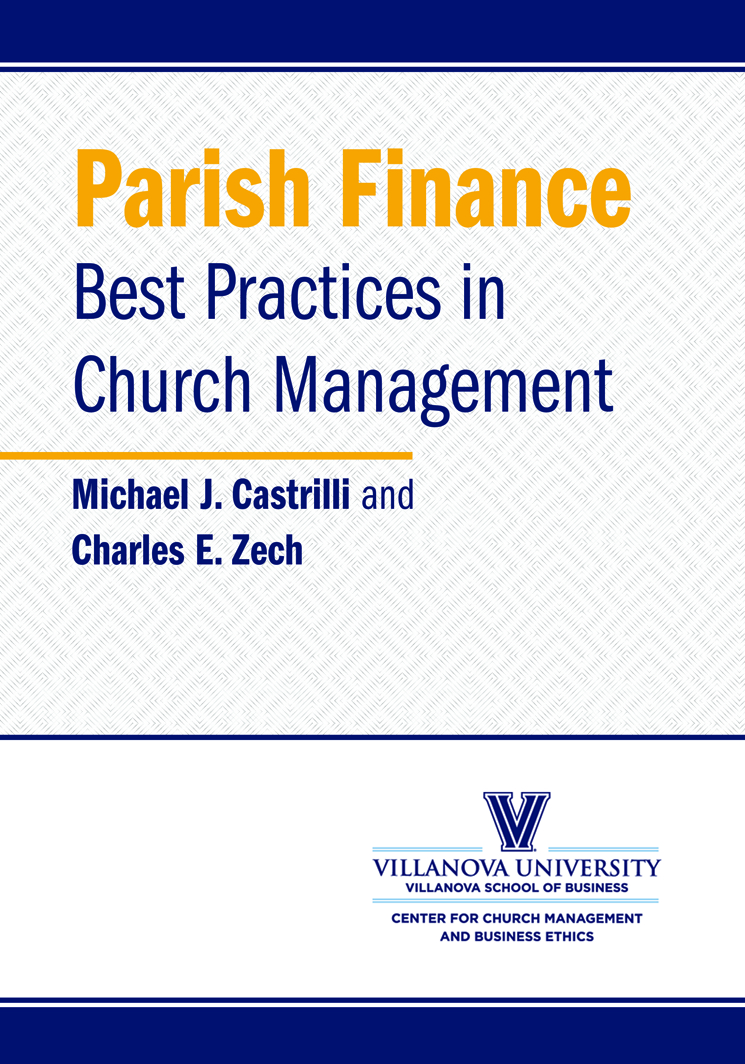
Below is an excerpt from Parish Finance: Best Practices in Church Management (Mahwah: Paulist Press, 2016).

Phase 1: Church Budget Formulation

Budget formulation is the process used to develop the budget. This is where you will review the variety of income and expense categories and determine how much you expect to receive and project how much you plan to spend. There are a variety of methods we can use to create the budget and in which we can develop the budget. Whether you use top-down, bottom-up, incremental, or flexible budgeting, the framework will help you structure the development.

In the budget formulation phase, the parish will get into the nuts and bolts of budget building. Here a variety of questions will be answered including:

  • What are the assumptions and expectations for the upcoming year?
  • How will resources be allocated for staff, programs, emerging requirements, or assets?
  • What information and methods will be used to ensure that accurate projections/forecasts are developed for income and expenses?

This is the phase of the budget process where we will build the “budget house.” We will review architecture plans, pour a solid foundation, frame the walls, and build a strong roof so that as storms rage, the house remains sturdy and strong.

Phase 2: Church Budget Execution

Once the income and expense parameters have been set, and the budget has been approved, the plan is ready to be implemented. Budget execution is the phase in the budget lifecycle when the checks are written, salaries paid, and income is received. Policies and procedures are established to ensure accountability. Clear roles and responsibilities are developed for who, what, when and how resources will be authorized, distributed, and accounted for. The outcomes of this phase are policies and procedures for collecting and distributing resources. Book: Parish Finance: Best Practices in Church Management

Phase 3: Church Budget Control

Complementing the execution phase, budget control is the part of the budgeting lifecycle that ensures that the efforts that you have put into the other steps of the process are successful. Strategies and techniques can be deployed to keep you on track and headed in the right direction with warnings along the way if you are getting off track. Actual income and spending amounts are compared to budgeted projections to measure variances between the amounts. With this information, parish managers can accurately account for resources or deploy mitigation tactics if spending is getting out of control or if resources need to be reallocated.

All three of these phases build upon one another and create a budget lifecycle that brings flexibility, adaptability, and accountability to financial planning and actions.

Qeustions/Comments? Contact me at mjcastrilli@gmail.com.

Filed Under: Church Budget and Finance Tagged With: Church Finance Tips

By Michael Castrilli

Catholic Press Association Award for Parish Finance Book!

Michael Castrilli and Dr. Charles Zech of Villanova University’s Center For Church Management won second place at the Catholic Press Association Awards for their book Parish Finance: Best Practices in Church Management. The book won in the “professional books” category of the competition, which features books on professional development with a Catholic context. These awards recognize the meaningful contributions of authors and publishers of Catholic work. Parish Finance: Best Practices in Church Management authored by Michael J. Castrilli and Charles E Zech

“It is a true honor to be recognized by the Catholic Press Association,” said Castrilli, co-author of the book and Business Fellow of the CCM. “Our goal for this book is to offer a practical, user-friendly guide for priests, seminarians and parish managers to learn the essentials of church finance and we are excited to be recognized for delivering on this promise,” he continued.

The book was praised by the Catholic Press Association for being extremely well outlined and providing a helpful overview on how to develop, understand and implement a church budget. It was noted as being a valuable tool to those both familiar and unfamiliar with the development of parish financial budgets, according to the Catholic Press Association.

“The recognition given to this book by the Catholic Press Association provides further acknowledgment of the increasing awareness of good financial stewardship in parishes, and in fact at all levels of the church,” said Dr. Zech, co-author of the book. “We purposefully wrote it at a level of understanding for new pastors and seminarians which demonstrates that a priest need not be a trained accountant to understand parish finances in the process of carrying out his governance function.”

“The collaboration of Mike Castrilli and Dr. Zech will provide unprecedented guidance in the field of parish financing and VSB is thrilled that their work has been recognized with this prestigious award,” said Joyce E. A. Russell, PhD, the Helen and William O’Toole Dean of VSB.

Read the Church Management Academy Blog

Filed Under: Church Budget and Finance, Church Finance Book

By Michael Castrilli

The Benefits of Church Budgeting

Image of Dove

My experience working with ministers is that for many, developing a church budget is a necessary, yet stressful and time-consuming exercise. People resist or even fear the topic because of seemingly complicating processes or past negative experiences. Even with personal finances, many people grow up learning that developing a budget is good practice but a constraining activity designed to prevent or control people from doing all of the things they want to do.

So, why spend the time working on the church budgeting process? Below are six benefits:

Church Budget Benefits

The budget is the plan and tool that will help you…

  1. Connect resources to parish priorities
  2. Create a plan to allocate money coming into the parish and expenses to be paid
  3. Ensure that plans stay on track
  4. Empower effective financial decisions
  5. Bring collaboration, communication, and buy-in
  6.  Strategize for the future

Filed Under: Church Budget and Finance

By Michael Castrilli

Data + Goal = Church Budget Method

Tip 12, choose a budget method that works for you. This also includes a picture of a church in Barcelona, Spain

Church budgets come in all shapes and sizes. Trying to form fit a best practice to your church budget isn’t the right approach. All church budget methods, tactics, and tools that we discuss must be right-sized for your congregation. The same is said when choosing which budget method you will use to formulate/develop the budget.

As we have discussed previously, the budget formulation phase is when you gather relevant policies, solicit information from staff and parishioners, document assumptions, and project revenues and expenses.

With the formulation phase, there are a variety of methods you can use to build the budget. No method is intended as a one-size-fits-all solution. My recommendation is to pick a method, or a hybrid of methods, to build the budget.

Budget methods all have advantages and disadvantages so understanding what you are trying to accomplish is essential. To choose a method, ask the question, “what is the goal that we are trying to achieve as we build this budget?”

For example, are you clear on the amount of money you have available for a project? In this case, top-down budgeting might work well. Are you seeking to understand each layer of the budget more clearly? The bottom-up method may be the best method for this question. No one can answer these questions but you (and your staff), depending on the context of your situation.  My point is that to evaluate your options, know what your goal is, and then go for it!

As faithful followers of this blog (thank you!), you know that I have written about the advantages and challenges of a variety of budget methods. So as not to repeat content on the blog, feel free to read the short method descriptions below, and click the links for more information!

Top-Down Budgeting – I know it may be intuitive, but a top-down approach to budgeting is when resources are allocated from a high-level and the details are then worked out based on this amount of funding. The advantage of top-down budgeting is that the method is relatively simple. It does not necessarily require labor-intensive cost estimating because the overall amount of money that will be budgeted is established.  Read More on Top-Down Budgeting

Incremental Budgeting – Incremental budgeting is the simplest technique to implement and is common across many churches as budgets are developed. Incremental budgeting involves determining a percentage increase or decrease in funding and then multiplying this percentage across categories. This technique has the distinct advantage of not requiring complex forecasting or cost estimating and can be applied across a wide range of data. The disadvantage is that you may be over/under-budgeting specific categories.  When budget categories are relatively consistent over time, this can be an effective method.

Bottom-Up Budgeting (Zero-Based Budgeting ZBB) – This method involves building a budget from the lowest income/expense elements and then rolling them up into the total budget request. From zero, each income and spending category is developed and justified. Read More on Bottom-Up Budgeting!

Read More Church Finance 30/30 Tips

Filed Under: Church Budget and Finance

By Michael Castrilli

Budgets guide people, but people control budgets

Rome on the seashore

Budgets are not developed to restrict you. Never forget, human beings are the ones that are managing the budget! You can’t take human insight, experience, and instinct out of financial management.

Remember a budget is not created to make you feel like you are trying to drag an anchor through the church pew.

Tip – Budgets guide people, but people control budgets

People often feel as if they are a servant to the budget, instead of the reverse. The budget is a plan, or a guide, to manage the money coming into the church (revenues) and the money going out (expenses).  As with any plan, at times, adjustments need to be made. Budgets are not meant to be perfect. By the very nature of a budget, we forecast revenue and expenses. A forecast is a prediction, and without humans to help navigate the budget, it merely becomes a nice looking, Excel spreadsheet!

What do you do about mistakes? Remember, you can always deploy the 3-R Approach to address financial challenges.

The key point – People are the critical link between a budget that works and a budget that fails.

Tip 2 is brought to you by the Church Finance 30/30 Series

Filed Under: Church Budget and Finance Tagged With: Church Finance Tips

  • « Previous Page
  • 1
  • …
  • 4
  • 5
  • 6
  • 7
  • 8
  • …
  • 10
  • Next Page »

Sign-Up for Academy News and Resources

We promise not to spam you!
* indicates required


Copyright © 2026 Church Management Academy