Church Management Academy

Education for Church Managers

  • Home Page
  • Education & Resources
    • Blog
    • Book
    • Workshops
  • About Us
    • Michael Castrilli
You are here: Home / Archives for Church Budget and Finance

By Michael Castrilli

The Benefits of Church Budgeting

Image of Dove

My experience working with ministers is that for many, developing a church budget is a necessary, yet stressful and time-consuming exercise. People resist or even fear the topic because of seemingly complicating processes or past negative experiences. Even with personal finances, many people grow up learning that developing a budget is good practice but a constraining activity designed to prevent or control people from doing all of the things they want to do.

So, why spend the time working on the church budgeting process? Below are six benefits:

Church Budget Benefits

The budget is the plan and tool that will help you…

  1. Connect resources to parish priorities
  2. Create a plan to allocate money coming into the parish and expenses to be paid
  3. Ensure that plans stay on track
  4. Empower effective financial decisions
  5. Bring collaboration, communication, and buy-in
  6.  Strategize for the future

Filed Under: Church Budget and Finance

By Michael Castrilli

Data + Goal = Church Budget Method

Tip 12, choose a budget method that works for you. This also includes a picture of a church in Barcelona, Spain

Church budgets come in all shapes and sizes. Trying to form fit a best practice to your church budget isn’t the right approach. All church budget methods, tactics, and tools that we discuss must be right-sized for your congregation. The same is said when choosing which budget method you will use to formulate/develop the budget.

As we have discussed previously, the budget formulation phase is when you gather relevant policies, solicit information from staff and parishioners, document assumptions, and project revenues and expenses.

With the formulation phase, there are a variety of methods you can use to build the budget. No method is intended as a one-size-fits-all solution. My recommendation is to pick a method, or a hybrid of methods, to build the budget.

Budget methods all have advantages and disadvantages so understanding what you are trying to accomplish is essential. To choose a method, ask the question, “what is the goal that we are trying to achieve as we build this budget?”

For example, are you clear on the amount of money you have available for a project? In this case, top-down budgeting might work well. Are you seeking to understand each layer of the budget more clearly? The bottom-up method may be the best method for this question. No one can answer these questions but you (and your staff), depending on the context of your situation.  My point is that to evaluate your options, know what your goal is, and then go for it!

As faithful followers of this blog (thank you!), you know that I have written about the advantages and challenges of a variety of budget methods. So as not to repeat content on the blog, feel free to read the short method descriptions below, and click the links for more information!

Top-Down Budgeting – I know it may be intuitive, but a top-down approach to budgeting is when resources are allocated from a high-level and the details are then worked out based on this amount of funding. The advantage of top-down budgeting is that the method is relatively simple. It does not necessarily require labor-intensive cost estimating because the overall amount of money that will be budgeted is established.  Read More on Top-Down Budgeting

Incremental Budgeting – Incremental budgeting is the simplest technique to implement and is common across many churches as budgets are developed. Incremental budgeting involves determining a percentage increase or decrease in funding and then multiplying this percentage across categories. This technique has the distinct advantage of not requiring complex forecasting or cost estimating and can be applied across a wide range of data. The disadvantage is that you may be over/under-budgeting specific categories.  When budget categories are relatively consistent over time, this can be an effective method.

Bottom-Up Budgeting (Zero-Based Budgeting ZBB) – This method involves building a budget from the lowest income/expense elements and then rolling them up into the total budget request. From zero, each income and spending category is developed and justified. Read More on Bottom-Up Budgeting!

Read More Church Finance 30/30 Tips

Filed Under: Church Budget and Finance

By Michael Castrilli

Budgets guide people, but people control budgets

Rome on the seashore

Budgets are not developed to restrict you. Never forget, human beings are the ones that are managing the budget! You can’t take human insight, experience, and instinct out of financial management.

Remember a budget is not created to make you feel like you are trying to drag an anchor through the church pew.

Tip – Budgets guide people, but people control budgets

People often feel as if they are a servant to the budget, instead of the reverse. The budget is a plan, or a guide, to manage the money coming into the church (revenues) and the money going out (expenses).  As with any plan, at times, adjustments need to be made. Budgets are not meant to be perfect. By the very nature of a budget, we forecast revenue and expenses. A forecast is a prediction, and without humans to help navigate the budget, it merely becomes a nice looking, Excel spreadsheet!

What do you do about mistakes? Remember, you can always deploy the 3-R Approach to address financial challenges.

The key point – People are the critical link between a budget that works and a budget that fails.

Tip 2 is brought to you by the Church Finance 30/30 Series

Filed Under: Church Budget and Finance Tagged With: Church Finance Tips

By Michael Castrilli

Perfect Is The Enemy of Good

A picture of Sagrada Familia, Barcelona Spain

Yesterday, we discussed the four stages of the church budget process. As you implement the four stages, it is important to remember a guiding principle –  perfect is the enemy of good! Why wait to create a collaborative and transparent budget process until you believe every aspect is perfect? No need to wait, you can start by just taking the first step.

Establish a Process

The first year of any new process can be challenging, but once established, every part of the organization will be on the same page of what is expected. For example, if your budget begins on July 1, you may want to establish that budget guidance will be distributed each April and the draft budget will be proposed by Memorial Day. Developing a schedule of key budget process dates provides everyone more flexibility so those involved can effectively manage their time. Establish a process in year one with the knowledge that it may not be perfect and that you can refine it by year two.

Reflection Questions 

  • What are the key dates or milestones for the various phases of the budget process?
  • Have I informed others about what is expected of them by certain dates?

Provide Clear Guidance

Give clear guidance on your expectations for the process, the future, and what success looks like moving forward. If you are going to ask others for information, communicate your objectives and provide visibility in your thinking for the upcoming year.

Reflection Questions:

  • Am I clear in my direction and thinking surrounding priorities?
  • Do I need to simplify or improve how individuals submit calculations and estimates?
  • Do I need to develop additional guidance surrounding narrative descriptions?

Open Communication Lines and Seek Feedback

The budget process should be an opportunity for all voices to be heard. When you open the budget process for the upcoming year and set expectations, hold a town hall meeting where all parishioners are welcome. Listen to the voices of the people around you. Open up the priority setting process so you can gain broader involvement and commitment by the staff and your parishioners. Ask individuals to help brainstorm ideas. If not, then be clear as to the direction you are setting. When others feel involved, they will be more committed.

Reflection Questions:

  • Who are your stakeholders that need to be brought into this process?
  • What voices have been missing that will help you create a spirit of openness and transparency?

Read More Church Finance 30/30 – 30 Tips in 30 Days

Filed Under: Church Budget and Finance Tagged With: Church Finance Tips

By Michael Castrilli

The Language of Church Finance

Tip 15, learn the language of church finance and a picture of St. Mary Major in Rome, Italy

At times, church budgeting can feel like learning a new language – new words, definitions, even new processes. Finance can feel like learning grammar for the first time. But, do not be afraid. I think it can look more intimidating than reality.

I am not saying that one can become a CPA overnight, but there is a great deal of empowerment that comes from learning the nuts and bolts of finance.  This also means that depending on your role at your church, you will have to determine what is the right level of education you need to manage your church finances.

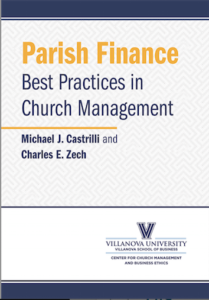
One of the main drivers that Dr. Chuck Zech and I wrote our book, Parish Finance: Best Practices in Church Management was to help pastors and parish administrators translate the language of financial management to their environment. I thought it might be helpful for me to put together a quick list of common terms to get people excited! Hopefully, some of these will help you translate this language and not feel overwhelmed, but empowered!

Accounting – Accounting is the systematic means of recording, managing, reporting, and communicating financial actions of an organization (Parish Finance, Chap 9).

Budget – Planning and management tool for executing priorities by projecting, allocating, and managing the money you receive and the money you plan to spend (Parish Finance, Chap 1).

Cash Flow Budget – Financial plan that displays anticipated actual income/receipts and expenditures for a given period. Unlike a linear budget that spreads income and expenses evenly over a period, the cash flow budget presents a realistic month-to-month (or week or day) projection of cash received and cash to be expended (Parish Finance, Chap 5).

Fiscal Year (abbreviated “FY”) – Period of time for which an organization plans the use of funds and reports financial status (Parish Finance, Chap 2).

Financial Management – Planning, organizing, directing and controlling the financial activities of the organization. Focuses on generating financial information that can be used to improve decisions (Parish Finance, Chap 9)

Generally Accepted Accounting Principles (GAAP) – Set of rules that must be followed for the organization’s financial statements to be deemed a fair presentation of the organization’s financial position and results of operations (Parish Finance, Chap 9).

Internal Financial Controls –– a process for assuring achievement of an organization’s objectives in operational effectiveness and efficiency, reliable financial reporting, and compliance with laws, regulations, and policies (Parish Finance, Chap. 8).

Master Budget – Comprehensive financial plan that includes operating and capital budgets and parish accounts and investments (Parish Finance, Chap 2).

Reallocation – The adjustment of resources between or within budget categories, also referred to as fund reprogramming (Parish Finance, Chap 7).

Segmentation of Duties – An approach to internal financial controls based on shared responsibilities related to the collection, deposit, disbursement, and reconciling of parish funds (Parish Finance, Chap 8).

Variance Analysis – Reporting tool to review, analyze, and take action based on the difference between budgeted and actual income and expenditures (Parish Finance, Chap 7).

Picture of St. Mary Major in Rome, Italy

Filed Under: Church Budget and Finance

  • « Previous Page
  • 1
  • …
  • 4
  • 5
  • 6
  • 7
  • 8
  • 9
  • Next Page »

Sign-Up for Academy News and Resources

We promise not to spam you!
* indicates required


Copyright © 2026 Church Management Academy