Church Management Academy

Education for Church Managers

  • Home Page
  • Education & Resources
    • Blog
    • Book
    • Workshops
  • About Us
    • Michael Castrilli
You are here: Home / Archives for Church Budget and Finance

By Michael Castrilli

Collaboration Yields Results

Church finance tip 4 is collaboration is the glue of insightful leadership, accountability, and results. Picture of the tapestry at the Los Angeles Catholic Cathedral in California.

There is powerful research that concludes that collaboration in fact yields results. James Surowiecki epic work, Wisdom of the Crowds, was groundbreaking in summarizing research that strongly supported the principle that “No one of us is smarter than all of us.”

One example in the book, that I found particularly useful in helping me understand the benefits achieved through collaboration, comes from the television game show, Who Wants to Be a Millionaire, hosted by Regis Philbin.

During the show, contestants worked through trivia questions in their attempt to win $1,000,000. As a fun twist, if the contestant faced difficulty with answering a question, they had three options available. They were only allowed to use each option once, throughout their time on the show. The options included:

  1. 50-50 – The computer eliminates two of the incorrect answers, giving the contestant a fifty-fifty chance at the right response
  2. Phone-a-Friend – Prior to the show, contestants singled out someone they could call for help who they considered one of the smartest people they knew
  3. Poll the Audience – The studio audience would cast votes by computer

From the results* of the show, Surowiecki writes:

“Everything we think we know about intelligence suggests that the smart individual would offer the most help. And, in fact, the ‘experts’ did okay, offering the right answer – under pressure – almost 65% of the time. But they paled in comparison to the audiences. Those random crowds of people with nothing better to do on a weekday afternoon and sit in a TV studio picked the right answer 91% of the time…” (Wisdom of the Crowds, 2004, Page 4)

Tip 4: Collaboration is the glue of insightful leadership, shared-accountability, and results

What does this have to do with church budgeting? The show is just the fun example of the benfits of collaboration. But, collaborative budget processes and operational management does prove time and time again to yield results.

A budget that is developed by one or two people does nothing to build a broader spirit of shared accountability across the church. Many leaders feel they may lose control when they bring others into the budget process. However, management research proves that involvement by a team in financial matters, specifically people responsible for the finances of a particular area, will more likely lead to better results.

Why?

If someone is involved in the budget process, and they feel as if they have had the opportunity to offer feedback and input, they’re more likely to “own” and “buy-in” to what has been created. Without participation in the process, resentment builds and can ultimately lead staff to consciously, or unconsciously, undermine what has been created.

Collaboration paired with open communication is where the budget will help church managers achieve the greatest potential of their organization.

Read more tips from Church Finance 30/30 – 30 Tips in 30 Days!

*Note: Surowiecki admits that this experiment would not stand scientific scrutiny. However, other examples in the book, would, in fact, support such an inquiry.

Filed Under: Church Budget and Finance Tagged With: Church Finance Tips

By Michael Castrilli

Church Visuals – Bars Aren’t Only For Drinking – The Bar Chart

Church Financial visual that displays a bar chart

As churches balance the broad range of financial information that parishioners seek, they also struggle with what to report and how to communicate this information. As we continue our discussion on best practices for communicating church finances with impact and ease and choosing the best visuals, let’s turn the infamous bar chart!

The Bar Chart

One of the most common visuals in reports is a bar/column chart. Using bars or other shapes, the visual displays discrete data in separate columns. These charts can be used to show one data set, or compare two or more data sets by lining them up in the same graphic.

Bar Charts Advantages

  • The chart offers readers a simple way to visualize data highs and lows at a glance.
  • The bar chart can help readers visualize trends, bumpiness or patterns in data. Trends occur when information moves in a general direction, or data can look bumpy meaning that the information is erratically up and down. The graph can also show patterns where data moves in a repeating fashion.
  • The use of colors and shapes offer an easy to read and appealing visually.
  • Comparing bars one against the other can quickly show progress or differentiation.

Cautions

  • If using a variety of colors to display more than two categories of data, ensure that the data can be easily recognized. For example, a black and white report may not show the subtle differences between columns.
  • Label the horizontal (X) and vertical (Y) axes.
  • Be careful not to overwhelm readers with so much data that the chart looks messy and then becomes difficult to read.

Next up in the world of visuals, Line Graphs! Interested in reading more? Read last week’s post All Pictures are Not Worth 1,000 Words – The Pie Chart

Church Financial visual that displays a bar chart

Excerpt from my original article in the Villanova University Center for Church Management and Business Ethics Newsletter, “Communicate Church Financial Information with Impact and Ease” (Spring 2017).

Filed Under: Church Budget and Finance

By Michael Castrilli

Communicate Church Finances with Impact & Ease

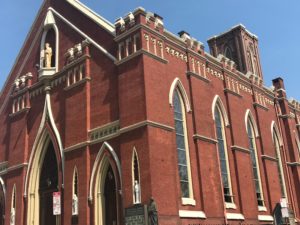
Tip 24, create clear financial reports that tell the story of your church finances and includes a picture of St. Paul Catholic Church in Philadelphia, Pennsylvania

Does your church struggle with creating clear, understandable and transparent church finance reports? If so, you are not alone!

As churches balance the broad range of financial information that parishioners seek, they also struggle with what to report and how to communicate this information. Many churches offer financial reports that are inaccessible or downright confusing, while others report results in such a basic fashion that the data does not lead to any clear insights.

Even though studies show that communicating financial information to parishioners has a positive impact on stewardship and involvement, many churches either fail to see the linkages or become paralyzed by the options. Sadly, beyond the reporting of the end-of-year financial statements, a significant number of churches choose not to report any financial information.

A substantive church financial report will both engage and empower parishioners to understand their parish finances. However, creating this type of report can feel overwhelming, so let’s break down the process into manageable components.

Construct the Financial Narrative

Define the Goal and Audience

Two questions are critical as you begin to create any financial report, “What is the goal of the report?” “Who is the audience?” Answers to these questions are essential to help you as you craft the narrative. By understanding the purpose of why you are creating a report, you will have direction as to what you build.

For example, are you offering a high-level overview of revenue and expenses for the prior year? Or, is the report being created for the Finance Council as they help you prepare the annual budget? The answers to these questions will help guide you as to what to include in the report and the level of details that are needed.

What is important in this process is that you include all relevant information to help the audience achieve informed insights. There is a tendency to believe that the term “financial transparency” is defined as “the more information provided, the better the report.” However, this is not true if the information you communicate overwhelms or even distracts the audience from the most critical information. Just because you have extensive data does not mean that you need to include every piece of information in all of your reports!

Tell a Story

Mark Twain said the first rule of writing was “that a tale shall accomplish something and arrive somewhere.” I argue that that the same rule applies to creating financial reports. The best church financial reports have a beginning, middle, and arrive at a conclusion. The structure you can use for your narrative is to start with where the parish is today with finances. Next, offer any context from the past that can help inform the present situation. Finally, conclude the narrative by looking towards the future.

The Present – Where are we today?

Begin the report with a narrative that concisely describes the current state of finances for the parish. Typically, this will include a discussion of overall revenue and expenses compared to budget targets. For many churches, more than 80% of income comes from collections. Therefore, offer a status on Sunday offerings, donations, and discuss any changes in program income.

In the narrative, include a discussion of expenses. Were there any significant outliers? For example, did a massive snowstorm cause maintenance costs to soar? The narrative can also describe updates on staff changes, capital projects, debt obligations/payments, endowment/savings accounts, policy changes, and/or any programmatic updates.

The Past – Where have we been?

In the next section of the narrative, discuss how the financial situation today relates to the history of the parish’s finances? For example, if collections are lower than anticipated, consider any previous cases when this has occurred. Visuals in this section can be particularly useful to offer additional context or convey complex financial information.

The Future – How are we leading into future?

Conclude the report with a discussion of the future. Consider answering questions that may include, “What are the areas of growth at our parish?” “What is the plan for addressing any challenges in the future?” “What areas are we most grateful?” “Where do we see our future as a parish community?”

For example, if there has been a surge in parishioner registrations, discuss the opportunities. If a new staff member has been hired to work on a particular program, discuss excitement for parishioners to get involved. If new policies are being implemented to address a financial situation, write about what actions are being taken to deal with what has happened.

How do I find out more information?

At the end of the report, provide a point of contact (POC) with name, phone number, and email to address comments, questions, or concerns. If readers seek further information, they will have a POC that can offer additional details.

Read More Church Finance 30/30 Tips

Excerpt from my original article in the Villanova University Center for Church Management and Business Ethics Newsletter, “Communicate Church Financial Information with Impact and Ease” (Spring 2017).

picture of the outside of St. Paul Catholic Church in Philadelphia Pennsylvania
St. Paul Catholic Church, Philadelphia

Filed Under: Church Budget and Finance Tagged With: Church Finance Reports

By Michael Castrilli

It’s Not Just a Phase

Tip 11, Formulate, Execute, & Control and a picture of the Cathedral of Notre Dame, Paris

My experience working with ministers is that for many, church budgeting is viewed as a necessary, yet stressful and time-consuming exercise. People resist or even fear the topic because of seemingly complicating processes or past negative experiences. Even with personal finances, many people grow up learning that developing a budget is good practice but a constraining activity designed to prevent or control people from doing all of the things they want to do.

In simple terms, the budget is the tool that connects church priorities to financial resources. The alignment between church mission, vision, pastoral priorities, and budgeting are integrally linked. Effective parish budgeting not only enables you to plan, allocate, and manage resources effectively, it will empower you with information and insights to help inform decision-making.

So, where do you begin? Let me help debunk the myth of budgeting as a constraining activity and provide some simple strategies for developing an effective, efficient, and collaborative budget and financial management practices. Let’s begin with understanding the three main phases of the church budget process.

Tip 11: Formulate, Execute, Control

Below is an excerpt from Parish Finance: Best Practices in Church Management (Mahwah: Paulist Press, 2016).

Phase 1: Church Budget Formulation

Budget formulation is the process used to develop the budget. This is where you will review the variety of income and expense categories and determine how much you expect to receive and project how much you plan to spend. There are a variety of methods we can use to create the budget and in which we can develop the budget. Whether you use top-down, bottom-up, incremental, or flexible budgeting, the framework will help you structure the development.

In the budget formulation phase, the parish will get into the nuts and bolts of budget building. Here a variety of questions will be answered including:

  • What are the assumptions and expectations for the upcoming year?
  • How will resources be allocated for staff, programs, emerging requirements, or assets?
  • What information and methods will be used to ensure that accurate projections/forecasts are developed for income and expenses?

This is the phase of the budget process where we will build the “budget house.” We will review architecture plans, pour a solid foundation, frame the walls, and build a strong roof so that as storms rage, the house remains sturdy and strong.

Phase 2: Church Budget Execution

Once the income and expense parameters have been set, and the budget has been approved, the plan is ready to be implemented. Budget execution is the phase in the budget lifecycle when the checks are written, salaries paid, and income is received. Policies and procedures are established to ensure accountability. Clear roles and responsibilities are developed for who, what, when and how resources will be authorized, distributed, and accounted for. The outcomes of this phase are policies and procedures for collecting and distributing resources. Book: Parish Finance: Best Practices in Church Management

Phase 3: Church Budget Control

Complementing the execution phase, budget control is the part of the budgeting lifecycle that ensures that the efforts that you have put into the other steps of the process are successful. Strategies and techniques can be deployed to keep you on track and headed in the right direction with warnings along the way if you are getting off track. Actual income and spending amounts are compared to budgeted projections to measure variances between the amounts. With this information, parish managers can accurately account for resources or deploy mitigation tactics if spending is getting out of control or if resources need to be reallocated.

All three of these phases build upon one another and create a budget lifecycle that brings flexibility, adaptability, and accountability to financial planning and actions.

Qeustions/Comments? Contact me at mjcastrilli@gmail.com.

Filed Under: Church Budget and Finance Tagged With: Church Finance Tips

By Michael Castrilli

Catholic Press Association Award for Parish Finance Book!

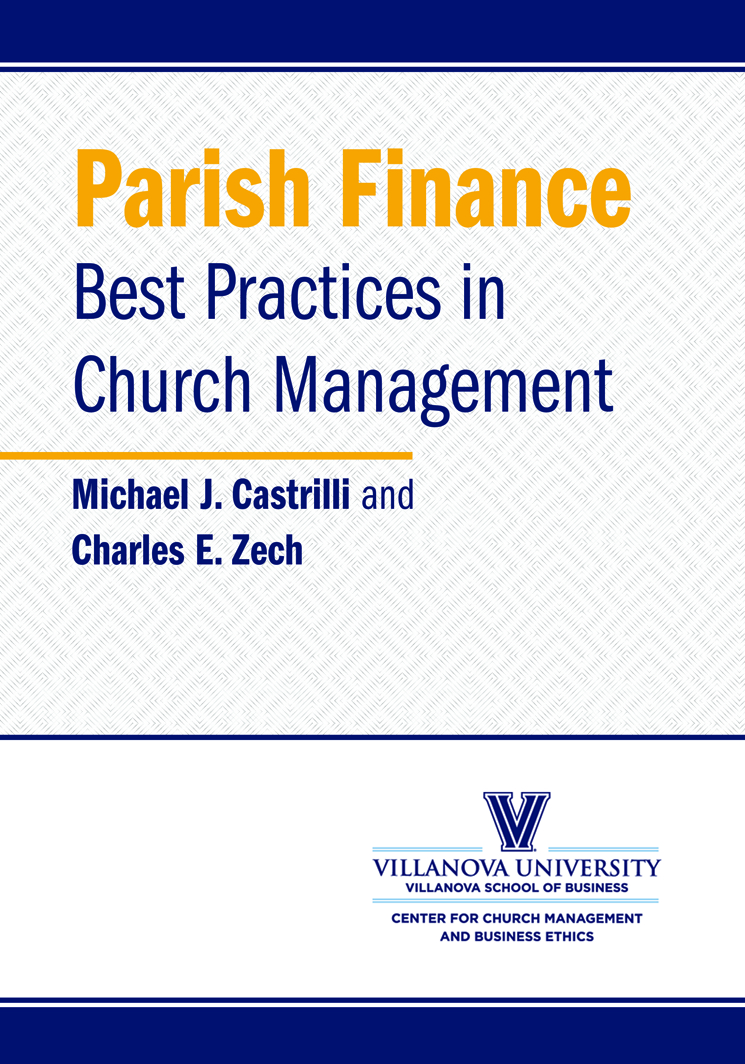
Michael Castrilli and Dr. Charles Zech of Villanova University’s Center For Church Management won second place at the Catholic Press Association Awards for their book Parish Finance: Best Practices in Church Management. The book won in the “professional books” category of the competition, which features books on professional development with a Catholic context. These awards recognize the meaningful contributions of authors and publishers of Catholic work. Parish Finance: Best Practices in Church Management authored by Michael J. Castrilli and Charles E Zech

“It is a true honor to be recognized by the Catholic Press Association,” said Castrilli, co-author of the book and Business Fellow of the CCM. “Our goal for this book is to offer a practical, user-friendly guide for priests, seminarians and parish managers to learn the essentials of church finance and we are excited to be recognized for delivering on this promise,” he continued.

The book was praised by the Catholic Press Association for being extremely well outlined and providing a helpful overview on how to develop, understand and implement a church budget. It was noted as being a valuable tool to those both familiar and unfamiliar with the development of parish financial budgets, according to the Catholic Press Association.

“The recognition given to this book by the Catholic Press Association provides further acknowledgment of the increasing awareness of good financial stewardship in parishes, and in fact at all levels of the church,” said Dr. Zech, co-author of the book. “We purposefully wrote it at a level of understanding for new pastors and seminarians which demonstrates that a priest need not be a trained accountant to understand parish finances in the process of carrying out his governance function.”

“The collaboration of Mike Castrilli and Dr. Zech will provide unprecedented guidance in the field of parish financing and VSB is thrilled that their work has been recognized with this prestigious award,” said Joyce E. A. Russell, PhD, the Helen and William O’Toole Dean of VSB.

Read the Church Management Academy Blog

Filed Under: Church Budget and Finance, Church Finance Book

  • « Previous Page
  • 1
  • …
  • 3
  • 4
  • 5
  • 6
  • 7
  • …
  • 9
  • Next Page »

Sign-Up for Academy News and Resources

We promise not to spam you!
* indicates required


Copyright © 2026 Church Management Academy